

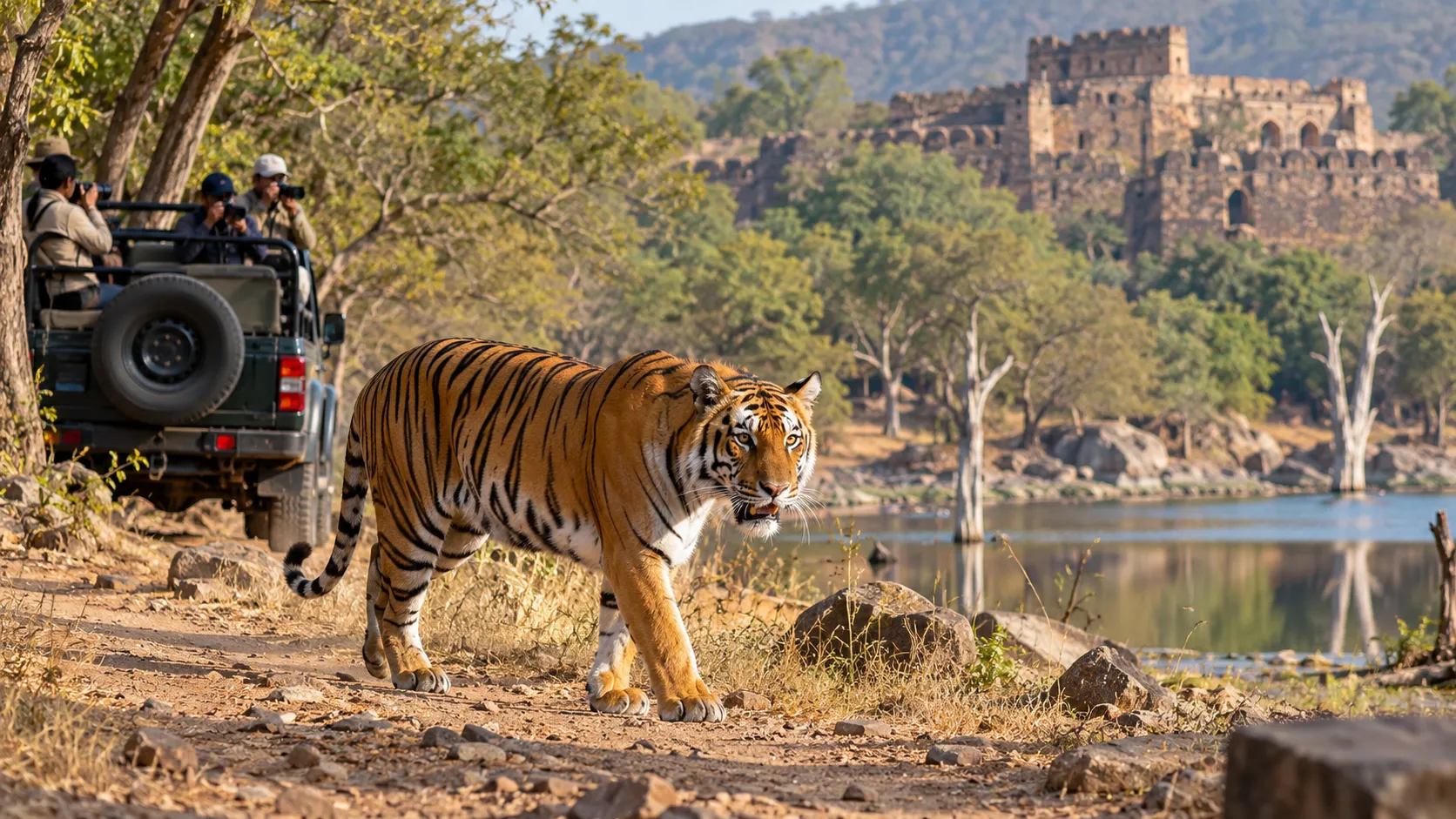
A wildlife safari offers a very different experience from exploring India’s historic cities. Instead of crowded streets and famous monuments, you enter a landscape of forest paths, rocky hills, lakes and open clearings where animals live in their natural surroundings. In Rajasthan, Ranthambore National Park is one of the best-known destinations for travellers interested in wildlife and tiger conservation.
Located near Sawai Madhopur, Ranthambore is particularly famous for its Bengal tigers. However, a visit is about more than spotting a tiger. The reserve’s varied landscapes, birdlife, other mammals and historic surroundings make it an interesting destination for nature lovers, photographers and families who enjoy outdoor experiences.
If you are considering a Ranthambore National Park safari, understanding the booking process, seasonal conditions and practical arrangements will help you prepare for the trip.
What Makes Ranthambore National Park Special?
Ranthambore lies in eastern Rajasthan and is part of a wider landscape important for tiger conservation. Its terrain includes dry deciduous forest, rocky ridges, grassland, lakes and ruins that reflect the area’s long history.
The park is known for Bengal tigers, but sightings are never guaranteed. Visitors may also encounter animals such as sambar deer, spotted deer, nilgai, wild boar and various reptiles. Birdlife adds another dimension to the experience, particularly around water bodies and wooded areas.
The landscape itself is a major attraction. Ancient ruins, forested slopes and lakes create a setting quite different from the deserts and palaces commonly associated with Rajasthan.
Ranthambore is a protected wildlife area, so visitors must follow park regulations and remain within authorised safari vehicles and routes. Respecting these rules helps protect both wildlife and visitors.
1. What Can You See on a Ranthambore Safari?
The main attraction for many visitors is the possibility of seeing a tiger in the wild. These animals move freely through their habitat, however, and their location changes throughout the day. Even when a safari does not produce a tiger sighting, there is plenty to observe.
Bengal Tigers
Ranthambore is widely associated with tiger conservation and has become a popular destination for wildlife enthusiasts. Seeing a tiger in its natural habitat can be an unforgettable experience, but no guide or safari operator can guarantee a sighting.
A patient approach makes the experience more rewarding. Listen to your naturalist, observe changes in the behaviour of other animals and enjoy the landscape rather than focusing entirely on finding a tiger.
Deer and Other Mammals
Sambar deer and spotted deer are among the mammals visitors may encounter. Depending on conditions and location, other wildlife may include nilgai, wild boar and langurs.
Animal activity varies with the season, temperature, water availability and time of day. Keep your eyes open and avoid making sudden movements or loud noises when animals are nearby.
Birds and Reptiles
Ranthambore also attracts birdwatchers. Birds around lakes, woodland and open areas add colour and movement to the safari. Depending on the season, visitors may observe different resident and migratory species.
Reptiles and smaller wildlife can also be part of the experience, although sightings depend on weather and habitat conditions.
Bring binoculars if birdwatching is important to you, and consider a camera lens suitable for photographing wildlife from a respectful distance.
2. When Is the Best Time to Visit Ranthambore?
The best time for a Ranthambore safari depends on your comfort with different weather conditions and the experience you want.
The cooler months, generally from October to March, are popular with visitors because conditions are often more comfortable for travel and outdoor activities. Winter mornings can be chilly, so warm layers may be useful for an early safari.
April and May can be very hot in Rajasthan. Temperatures may make outdoor travel less comfortable, but animal activity around water sources can change with conditions. This does not mean sightings are guaranteed.
The reserve follows seasonal operating arrangements, and some areas or safari routes may close during parts of the year, including the monsoon period. Exact dates and availability can vary, so check current official park information before choosing your travel dates.
Rather than planning a trip around a guaranteed wildlife encounter, allow yourself to appreciate the full natural environment.
3. How Does a Ranthambore Safari Work?
Safaris take place in authorised vehicles with designated routes and entry arrangements. Visitors generally book a permitted safari slot in advance, subject to availability and the current booking system.
Depending on the available option, the vehicle may be a shared canter or a smaller jeep. The choice can affect group size, seating arrangements and the overall feel of the excursion.
Before booking, confirm the safari date, time slot, vehicle type, entry arrangements and identification requirements. Use official booking channels or a reputable provider, and check whether the quoted cost includes transport to the park entrance.
Arrive at the designated reporting point on time. Entry procedures can require verification of booking and identification, and late arrivals may face restrictions.
Once inside the reserve, follow your guide’s instructions. Remain seated as required, do not feed animals, avoid littering and never attempt to approach wildlife.
4. What Should You Carry on Safari?
Packing sensibly can make an early morning or afternoon safari more comfortable.
- Comfortable clothing: Choose practical clothes suitable for the weather and the duration of the excursion.
- Warm layers: Winter mornings can be cold, particularly in an open vehicle.
- Sun protection: Carry a hat, sunglasses and sunscreen for warmer conditions.
- Water: Follow park rules and your operator’s instructions regarding permitted items and waste.
- Binoculars: These are useful for observing birds and animals from a distance.
- Camera: Bring suitable equipment, but keep photography secondary to enjoying the experience.
- Identification and booking details: Carry the documents required for entry.
Avoid wearing strong fragrances, playing loud music or making unnecessary noise. Wildlife observation is best enjoyed quietly and respectfully.
5. How to Reach Ranthambore
Sawai Madhopur is the principal town associated with visits to Ranthambore National Park. Travellers can plan their journey by rail or road, depending on their starting point and schedule.
If you are travelling from Jaipur, Agra or Delhi, consider the distance and the time needed to reach the park before your safari slot. A same-day road journey may be tiring or impractical for some schedules, especially when an early safari is planned.
An overnight stay near Sawai Madhopur can make the experience more relaxed. It gives you time to reach the reporting point without rushing and may allow you to enjoy more than one authorised safari, subject to availability.
If Ranthambore is part of a wider Rajasthan itinerary, coordinate transport and accommodation around your confirmed safari time rather than booking the rest of the journey first.
6. Where Should You Stay?
Accommodation near Ranthambore ranges from simple guesthouses to comfortable hotels and nature-focused resorts. The right option depends on your budget, preferred facilities and how close you want to be to the safari reporting point.
When comparing properties, check the location, meals, transport arrangements and cancellation conditions. Some properties may help coordinate local transfers or provide information about safari logistics, but confirm exactly what is included.
If you are planning an early departure, ask about breakfast timings and whether packed meals are available. It is also worth checking how far the property is from the designated pickup or reporting point.
For a more relaxed trip, consider staying overnight rather than travelling long distances immediately before your safari.
7. Combine Ranthambore with a Rajasthan Tour
Ranthambore can be included in a longer Rajasthan journey for travellers who want a mix of wildlife, architecture and local culture.
A trip might combine Jaipur’s forts and palaces with a wildlife experience near Sawai Madhopur. Depending on the available time, you could continue towards other destinations in Rajasthan or incorporate the park into a wider itinerary that begins in Delhi or Agra.
The important part is to plan travel days realistically. Road journeys, safari reporting times and hotel check-ins all need to fit together. Avoid placing a long transfer immediately before a confirmed safari unless you have allowed sufficient time for delays.
A customised itinerary can help coordinate transport and accommodation around your interests, especially if you are travelling with family or a small group.
8. Responsible Wildlife Tourism Matters
Wildlife tourism should prioritise animal welfare and habitat protection. A memorable safari is not measured only by how close you get to an animal or whether you see a tiger.
Choose authorised safari arrangements and follow the rules provided by park staff and naturalists. Never ask a driver to leave an approved route, pursue an animal or disturb wildlife for a photograph.
Keep noise to a minimum, do not feed animals and take all permitted waste back with you. Use photography equipment responsibly and avoid actions that could frighten or disrupt wildlife.
Remember that sightings are unpredictable. Respect for the animals and their environment helps preserve the experience for future visitors as well.
Plan Your Ranthambore Wildlife Experience
Ranthambore National Park offers a memorable opportunity to experience Rajasthan’s natural landscape and observe wildlife in a protected habitat. From the possibility of seeing a Bengal tiger to watching birds around forest lakes, each safari brings its own discoveries.
Plan your visit around confirmed safari availability, suitable transport and comfortable accommodation. Check seasonal park arrangements before travelling, follow the rules and allow yourself to enjoy the entire landscape rather than expecting a particular sighting.
If you are planning a wider journey through Rajasthan or the Golden Triangle, Atul Holidays can help you explore relevant tour options and travel arrangements. Enquire about your preferred route and schedule to find an itinerary that fits your trip.